
Centrifugal Compressor Modeling: Accuracy vs. Compute Time
ClientHoneywell-Garrett (via EESC-USP Formula SAE partnership)
- CFD
- Optimization
- Powertrain
Result
Four-tier simulation framework benchmarked against bench-tested turbo data
The problem
Genetic-algorithm geometry optimization for a turbocharger compressor needs hundreds of CFD evaluations. Full 3D rotor-and-volute simulations are the most accurate but far too slow to run at that scale — so the real question isn’t “what’s the best model,” it’s “what’s the least complex model that still finds the right answer.”
Approach
Working from a Garrett GT3776 turbocharger bench-tested in partnership with Honeywell-Garrett, I built four simulation approaches spanning a deliberate accuracy/speed trade-off: a fast 2D throughflow model at one end, a full 3D transient model with the complete rotor and volute geometry at the other, and two intermediate simplified 3D variants in between. Each was benchmarked against the bench-tested compressor map to quantify exactly how much accuracy each simplification costs.
With the benchmark established, a Multi-Objective Genetic Algorithm (NSGA-II) then searched the Pareto frontier to optimize the compressor’s overall dimensions and blade/splitter aerodynamics for a target operating condition — repeated across each of the four modeling tiers to see how model choice changes what the optimizer converges on.
Result
The framework identifies a mid-complexity model that reaches essentially the same optimized geometry as the full 3D model, at a fraction of the compute cost — the basis for a repeatable methodology rather than a one-off result.
Why it matters for your program
Optimization projects live or die on how many design evaluations you can afford to run. Knowing exactly which simplifications are safe — and which aren’t — for your specific geometry and operating range is what turns “optimization” from a slow, expensive search into something you can actually iterate on.
Walkthrough
How it came together
- 01
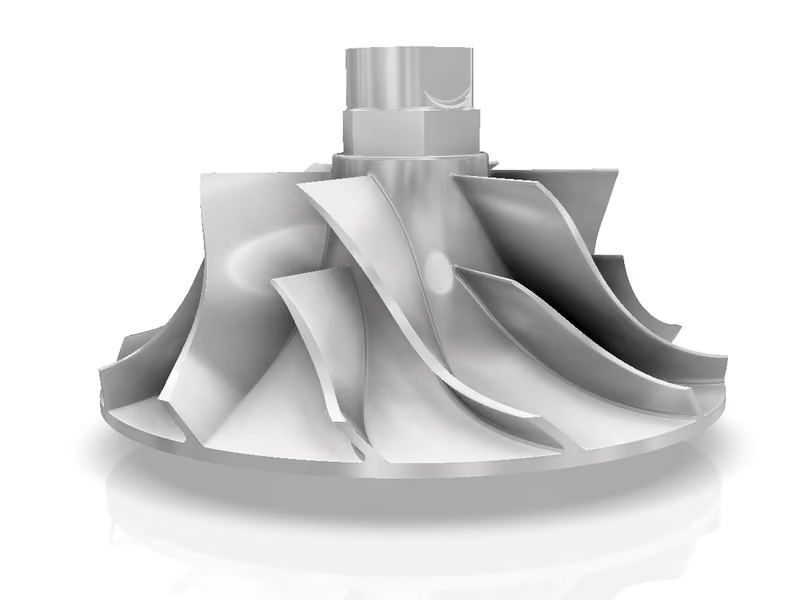
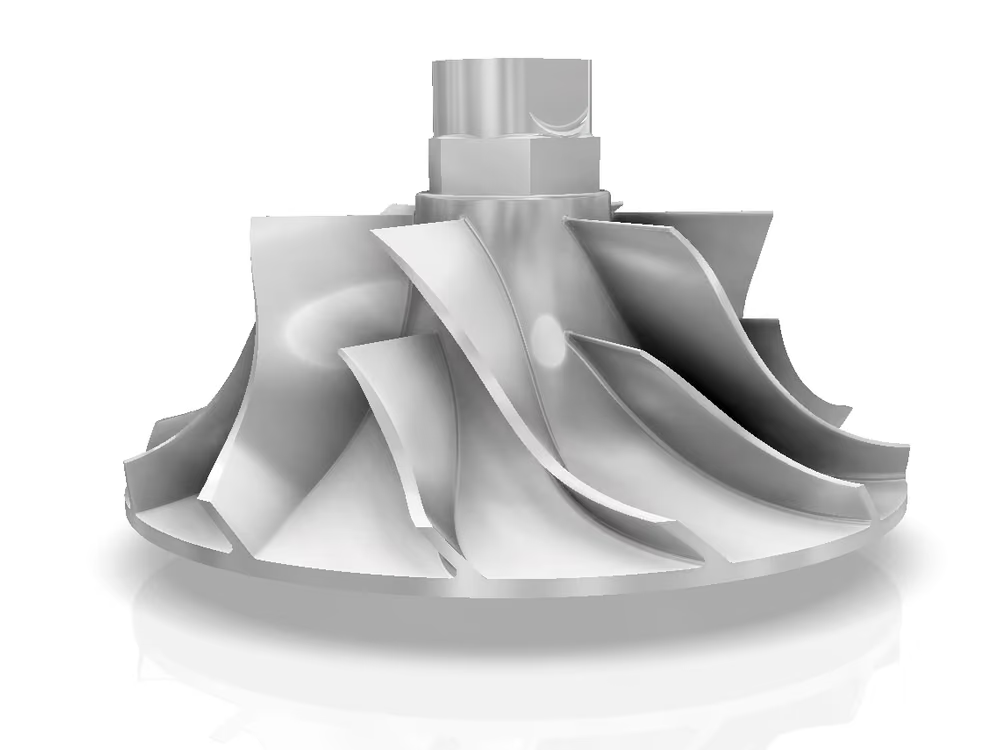
Design point from the compressor genetic optimization, using the frozen rotor technique
- 02
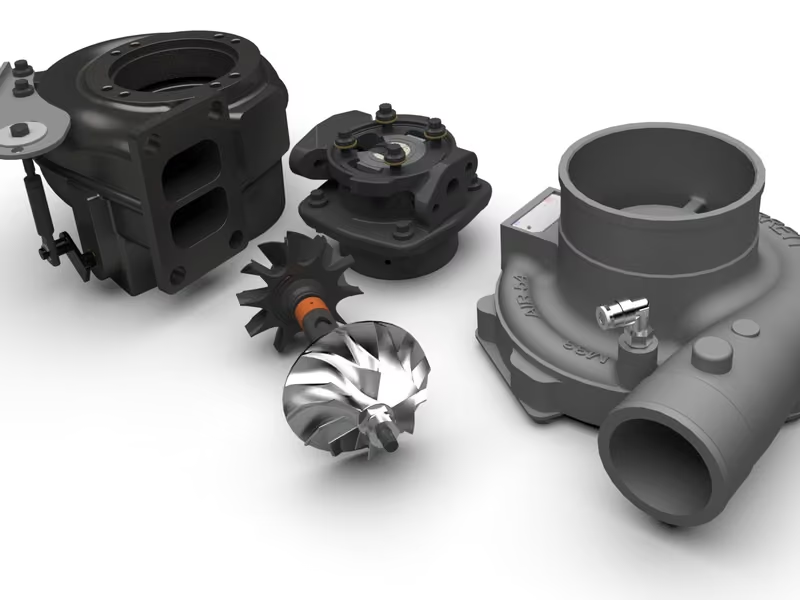
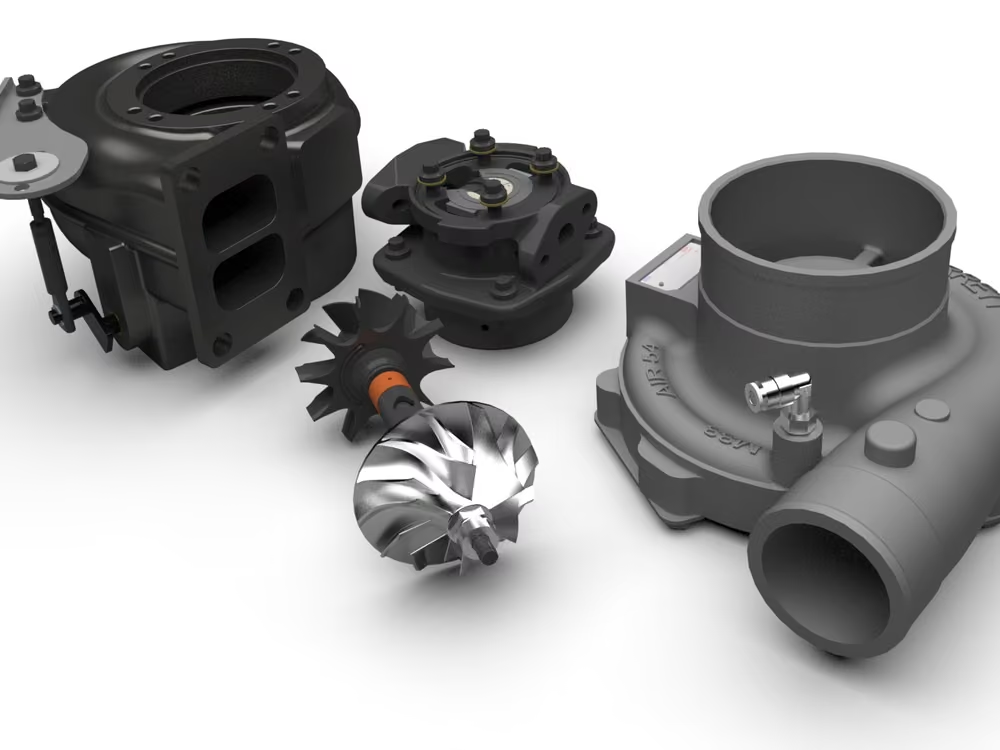
Components of the Garrett GT3776 turbocharger, the base geometry used for correlation analysis
- 03
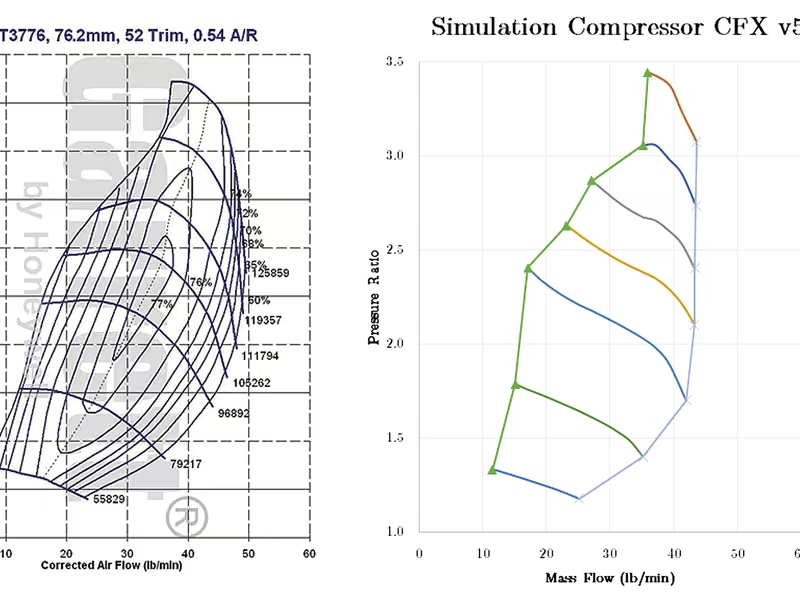
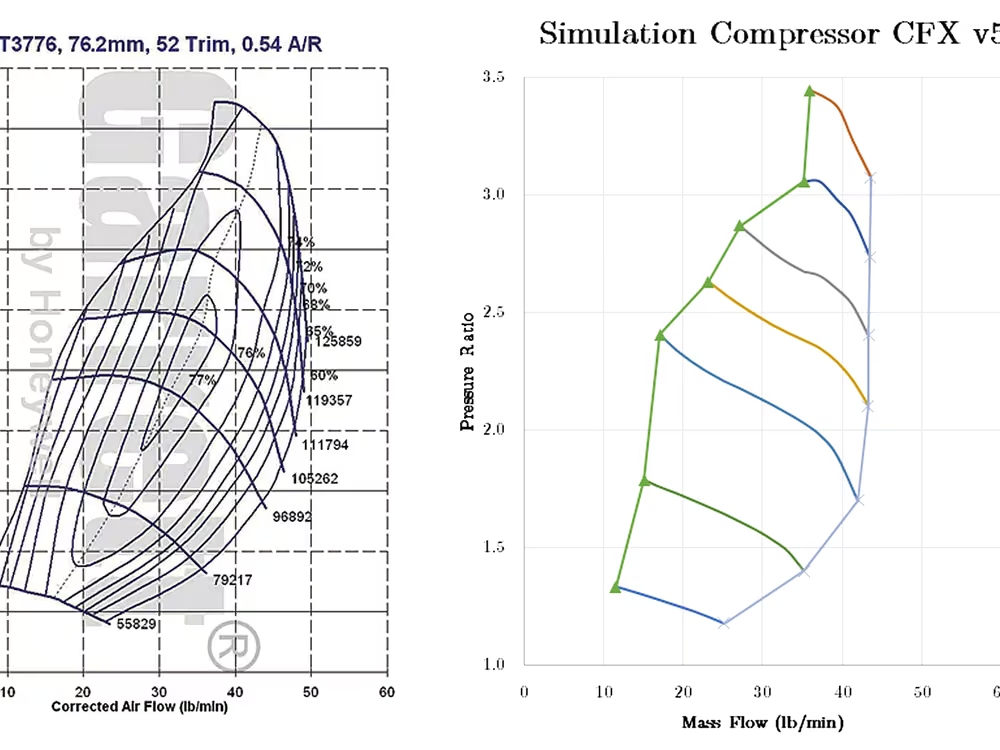
Performance map comparison between bench-tested turbo (left) and simulated turbo (right) using the frozen rotor technique
Have a similar problem?
Four-tier simulation framework benchmarked against bench-tested turbo data. Tell me what you're working on and I'll tell you directly whether and how I can help.
I reply to every enquiry within one business day.
+55 16 99785-1402