The problem
A normally-aspirated engine running a spec air restrictor loses power to the restrictor’s throttling effect. The only way to claw it back is to make every intake pulse count — and that means tuning the manifold’s acoustic resonance, not just its bore geometry.
Approach
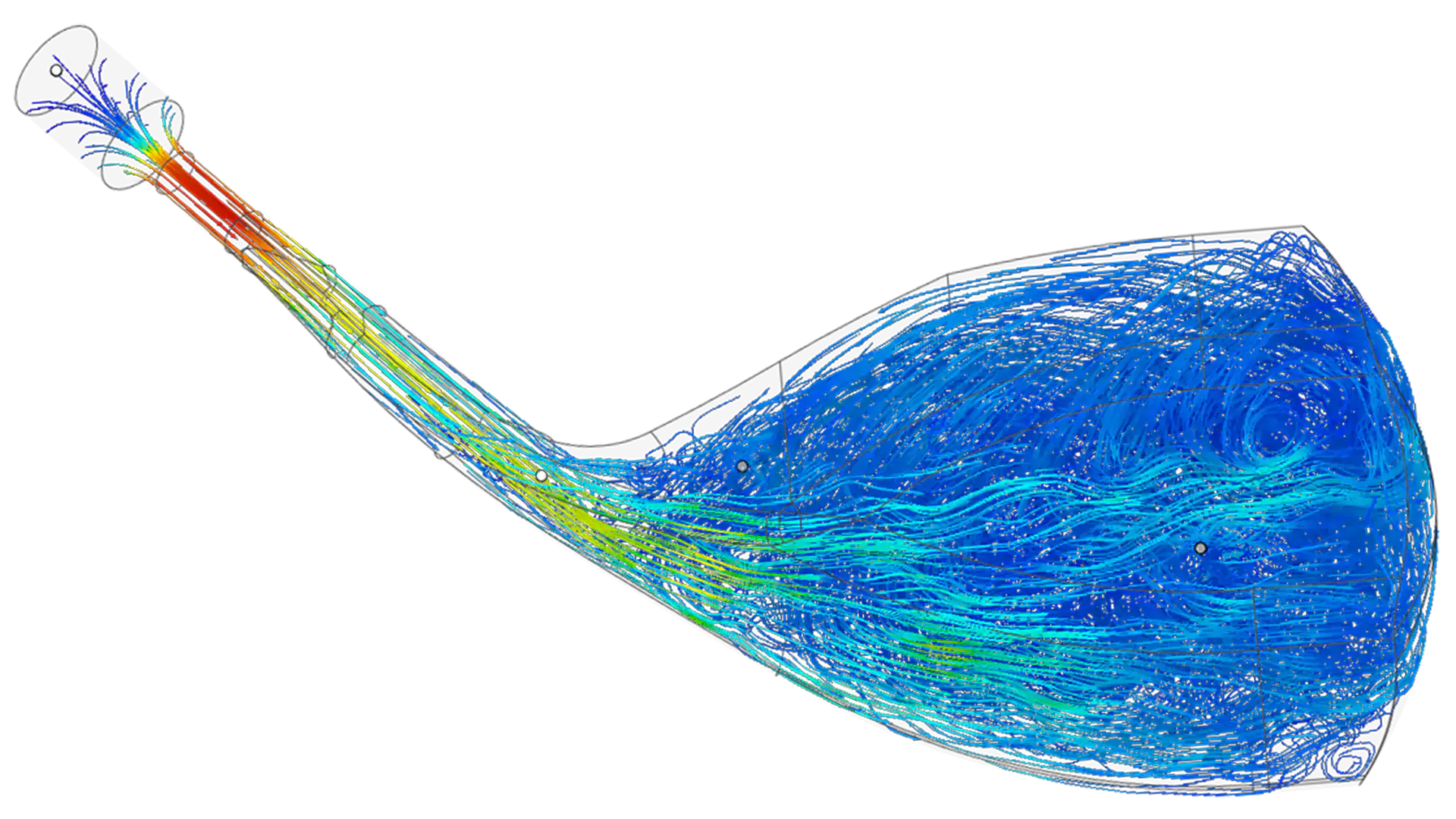
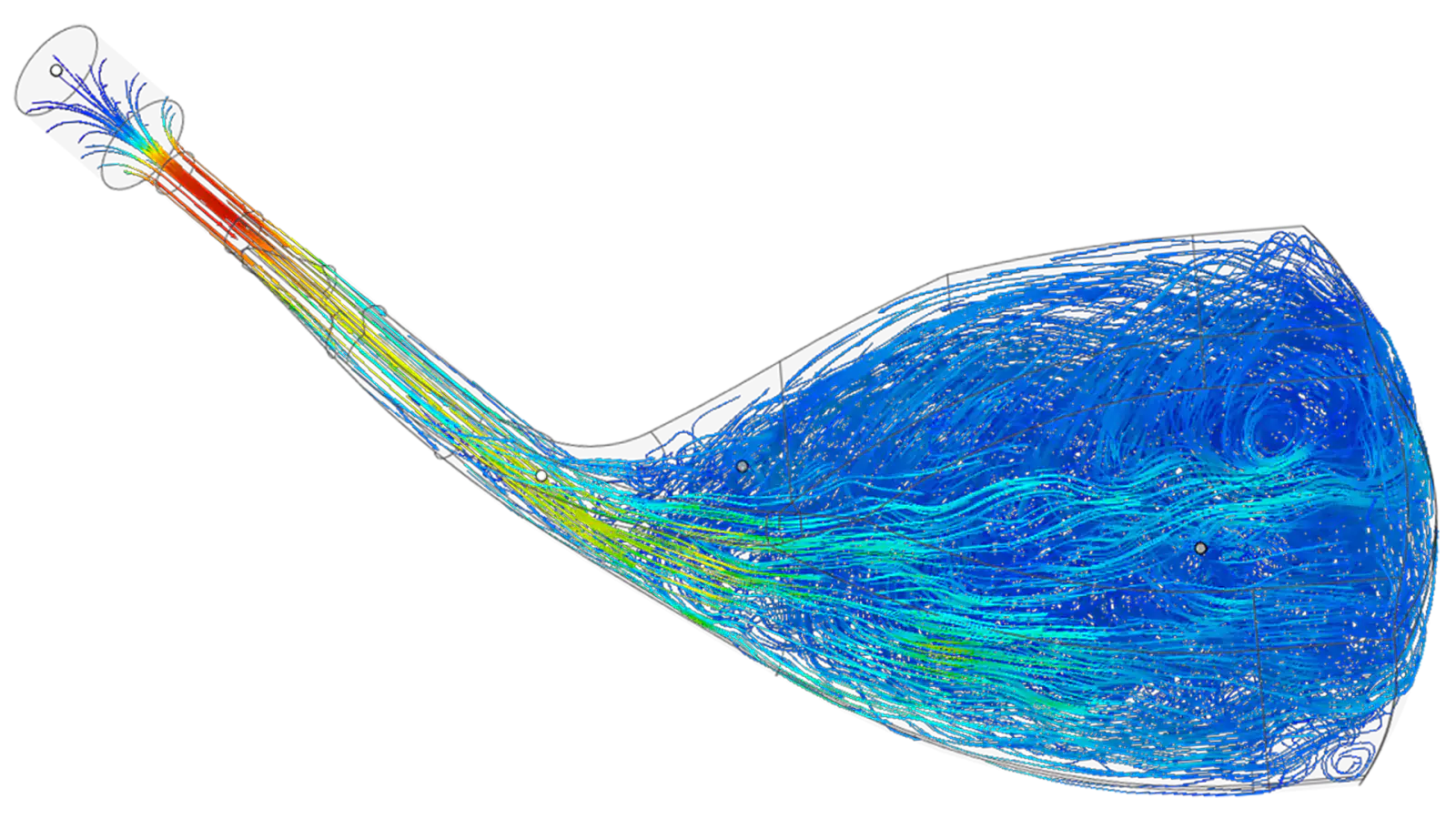
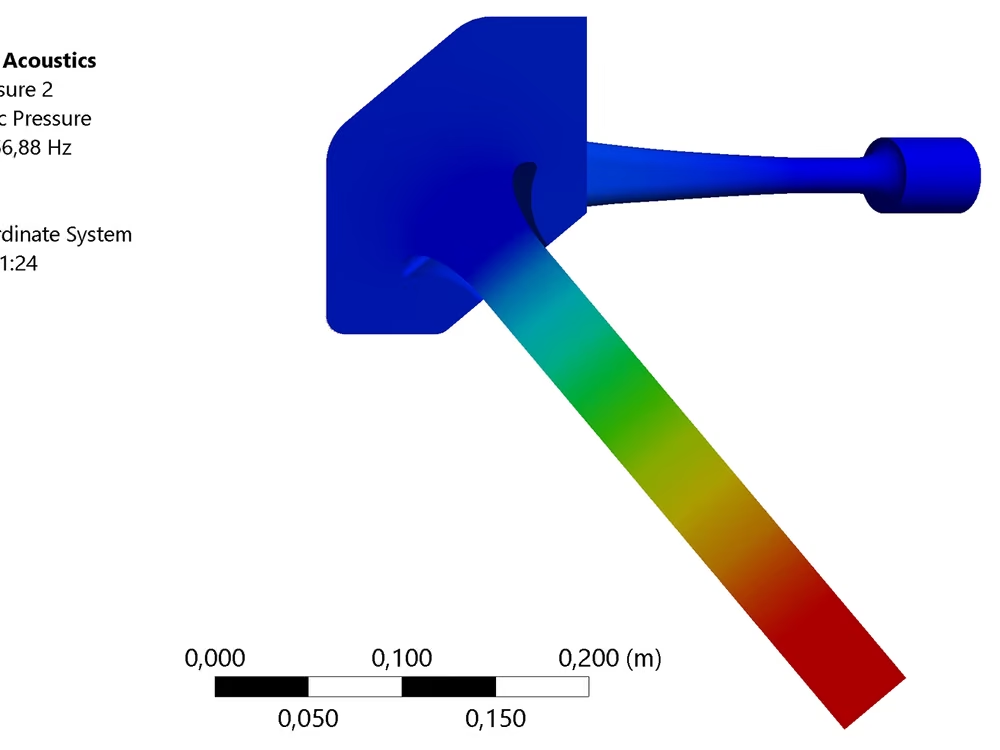
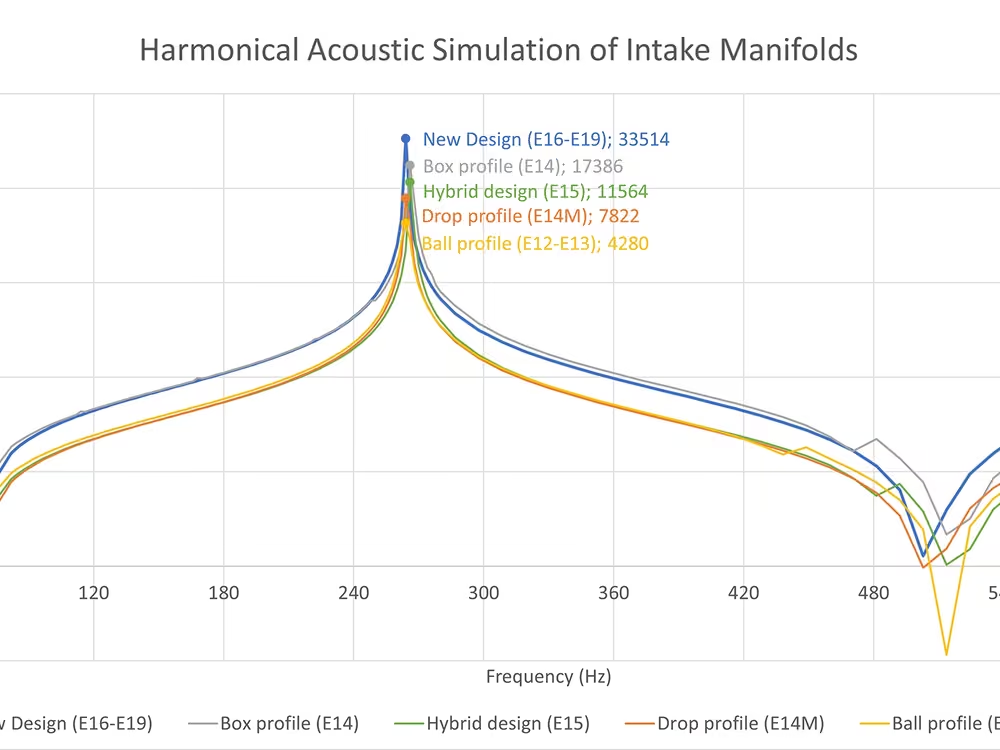
I built a discrete (1D) engine model to feed a multicriteria optimization of the manifold’s overall dimensions, then used that geometry as the starting point for two coupled simulations: a harmonic acoustic analysis in Ansys to tune the first and third pressure-wave harmonics — the two strongest — to hit resonance at the target power-peak RPM, and a transient 3D CFD simulation coupled back to the 1D model and to the fuel injector’s own CFD model, so pressure and temperature effects on fuel delivery were captured rather than assumed.
Mesh and turbulence-model selection mattered as much as the acoustic tuning: getting the boundary-layer discretization and diatomic fluid model right was what let the simulation actually predict the detachment and resonance behavior instead of just approximating it.
Result
Dynamometer testing against the same powertrain and prior tuning showed a 16% increase in maximum power, driven by volumetric efficiency reaching 108% — well above the 80–90% typical range reported in the literature for this class of engine.
Why it matters for your program
This is the kind of gain that doesn’t come from a bigger part — it comes from getting the physics of a specific engine’s pulse timing right. If your intake, exhaust, or induction system is leaving power on the table, coupled 1D/CFD/acoustic modeling is usually the fastest way to find out how much and where.
Simulation footage
Transient Flow Development Inside the Intake Manifold
Walkthrough
How it came together
- 01
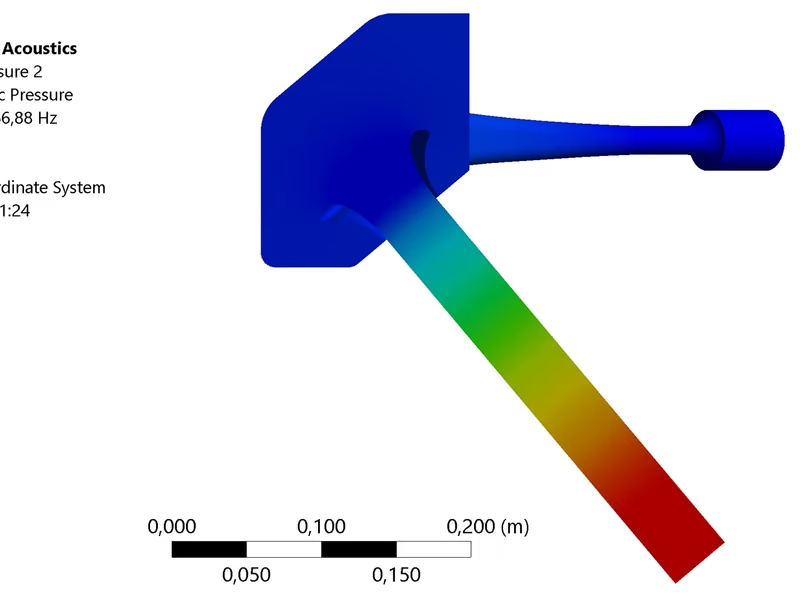
Acoustic simulation of the intake manifold showing a strong resonating pressure wave at the intake port
- 02
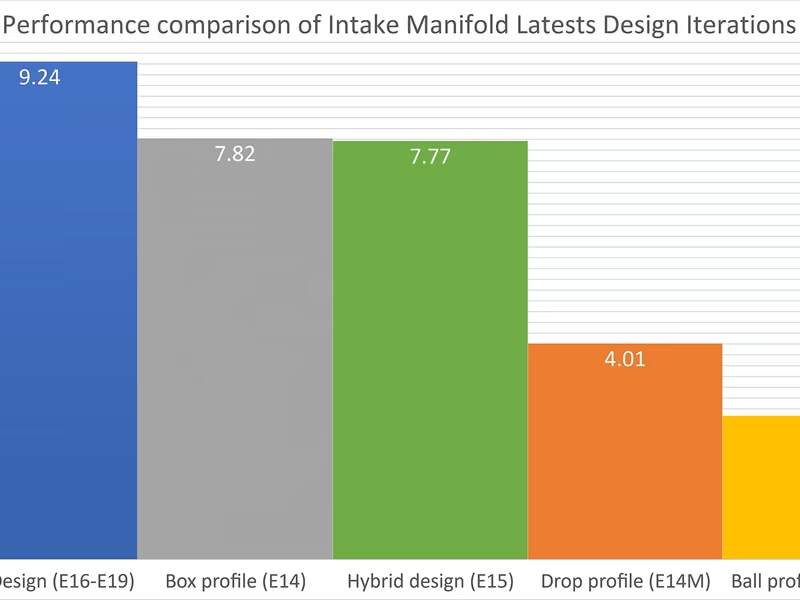
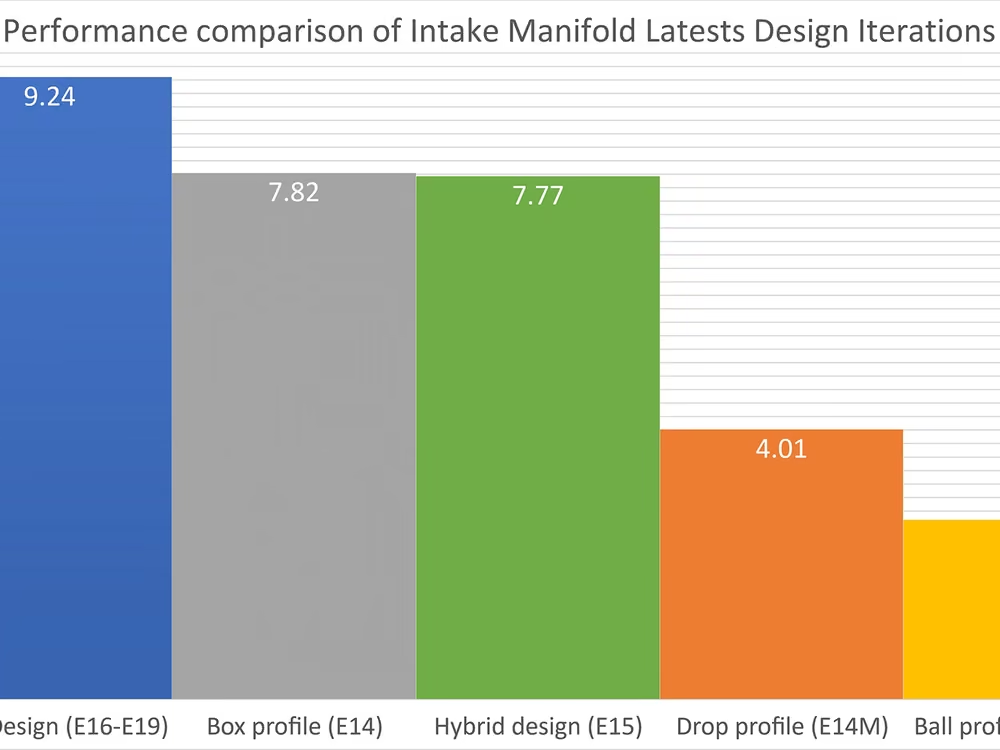
Performance comparison among commonly used manifold shapes, prior design iterations, and the new design
- 03
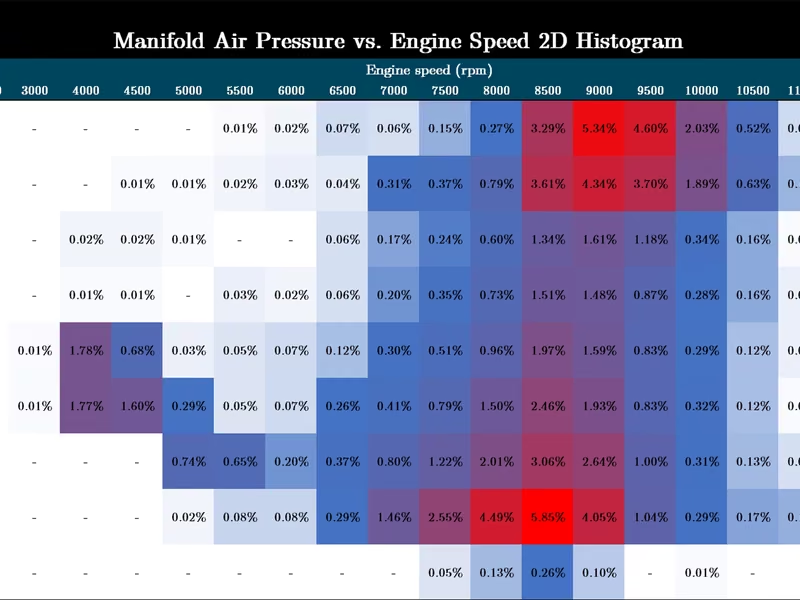
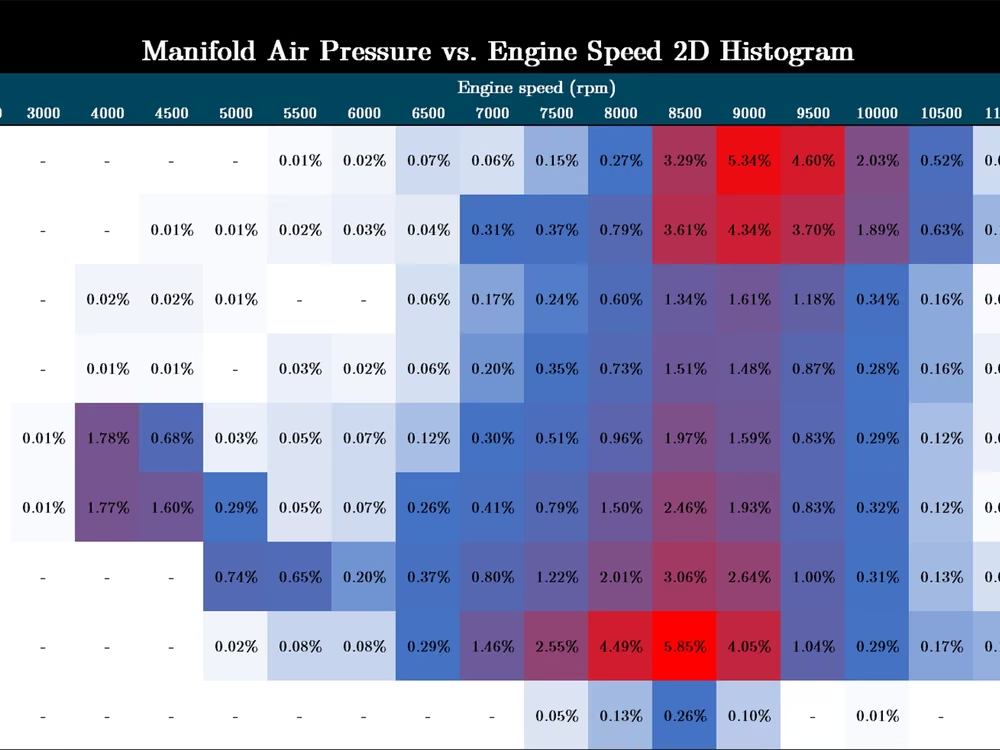
Time histogram of an autocross lap, highlighting the frequency of pressure ratio spikes up to 1.05
- 04
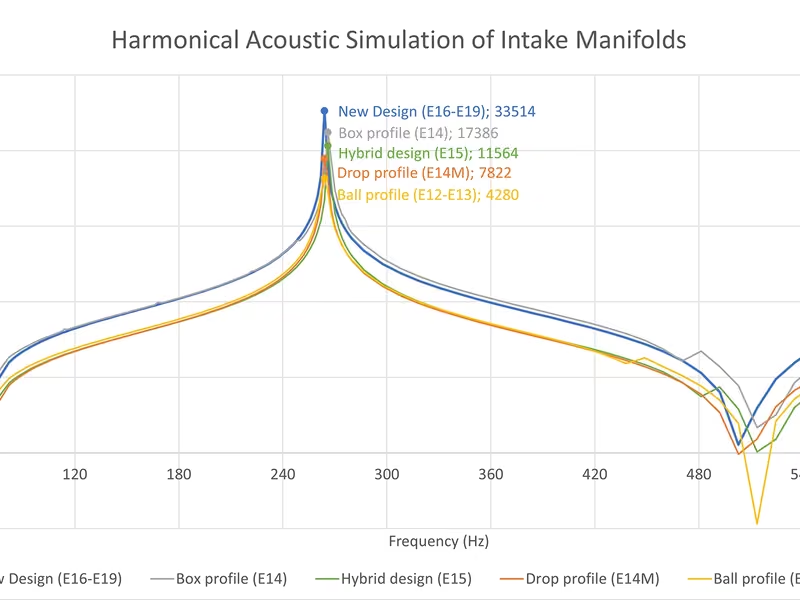
Harmonic comparison of frequency and intensity across manifold design iterations
- 05
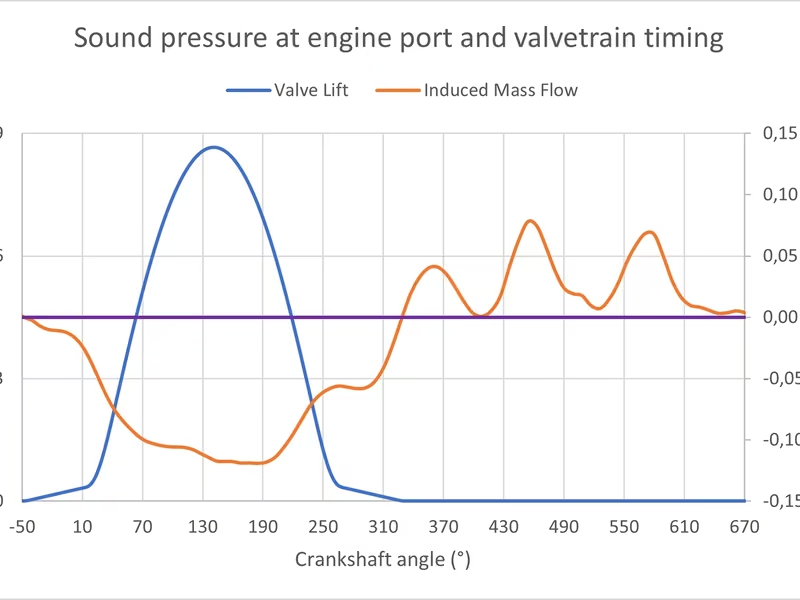
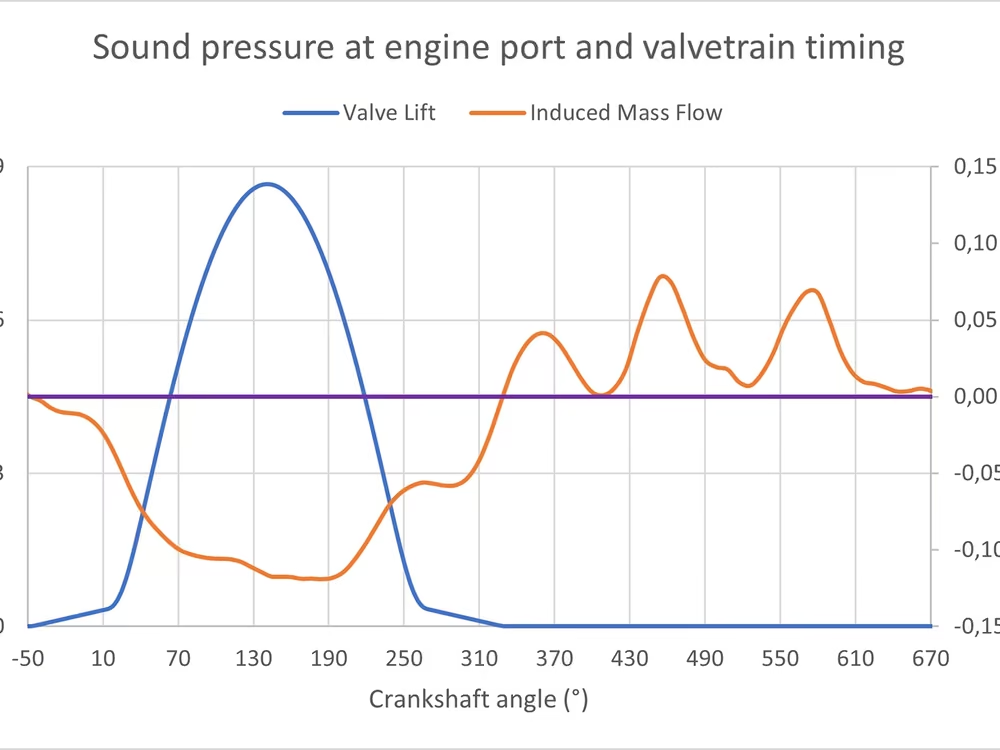
Synchronism of the high-pressure wave traveling out of the intake manifold and the intake valve opening
Have a similar problem?
+16% peak power, 108% volumetric efficiency. Tell me what you're working on and I'll tell you directly whether and how I can help.
I reply to every enquiry within one business day.
+55 16 99785-1402