Reactive Resonator for Noise Reduction Without a Power Penalty
ClientEESC-USP Formula SAE
- CFD
- Acoustics
- Powertrain
The problem
A passive muffler alone can’t attenuate the low-frequency noise a race engine produces, and any component that reduces that noise typically does so by restricting flow — which costs power exactly when it’s most needed, at high RPM and full load. The brief was a component that behaves differently depending on engine speed: restrictive at low RPM, essentially free-flowing at high RPM.
Approach
The geometry does that through three coupled design mechanisms. First, a set of internal fins angled so that at high flow speed the gas interacts with only one face of the first fin and passes largely unimpeded, while at low speed the same fins generate vortices strong enough to create real resistance — each fin’s angle tuned by a genetic algorithm to hit that exact behavior. Second, controlled vortex structures inside the chamber that oppose flow at low speed but get pulled along and accelerate the flow at high speed, exploiting the rounded chamber walls and the space the first fin leaves open. Third, the chamber’s volume and internal wall spacing tuned — using Helmholtz resonator and room-resonance theory — to resonate at the target frequency, producing backpressure at low speed and low pressure at the exhaust at high speed.
Result
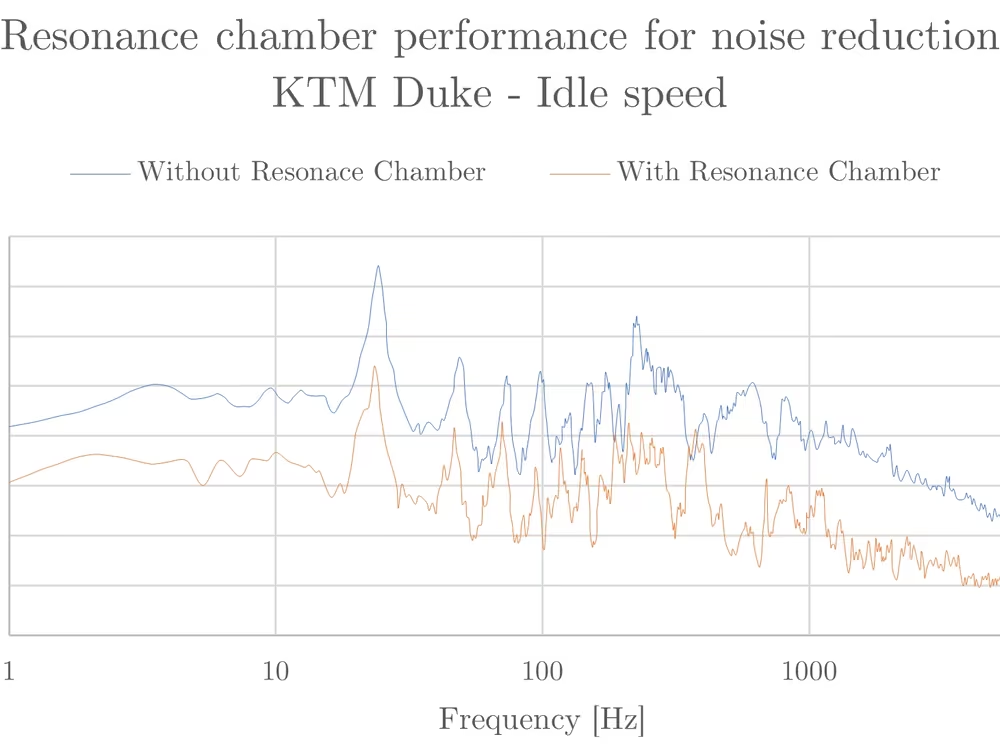
Back-to-back dynamometer and track testing against a conventional exhaust setup (both properly tuned) showed a 10 dBC average noise reduction across the RPM range, 12 dBC at idle where the problem is worst, and a 2% power gain in the powerband from the improved high-speed exhaust flow.
Why it matters for your program
Noise and flow requirements usually get treated as a trade-off. When the requirement genuinely differs by operating condition — quiet at idle, unrestricted at load — a passive geometry tuned to behave differently across that range can deliver both, without active hardware.
Simulation footage
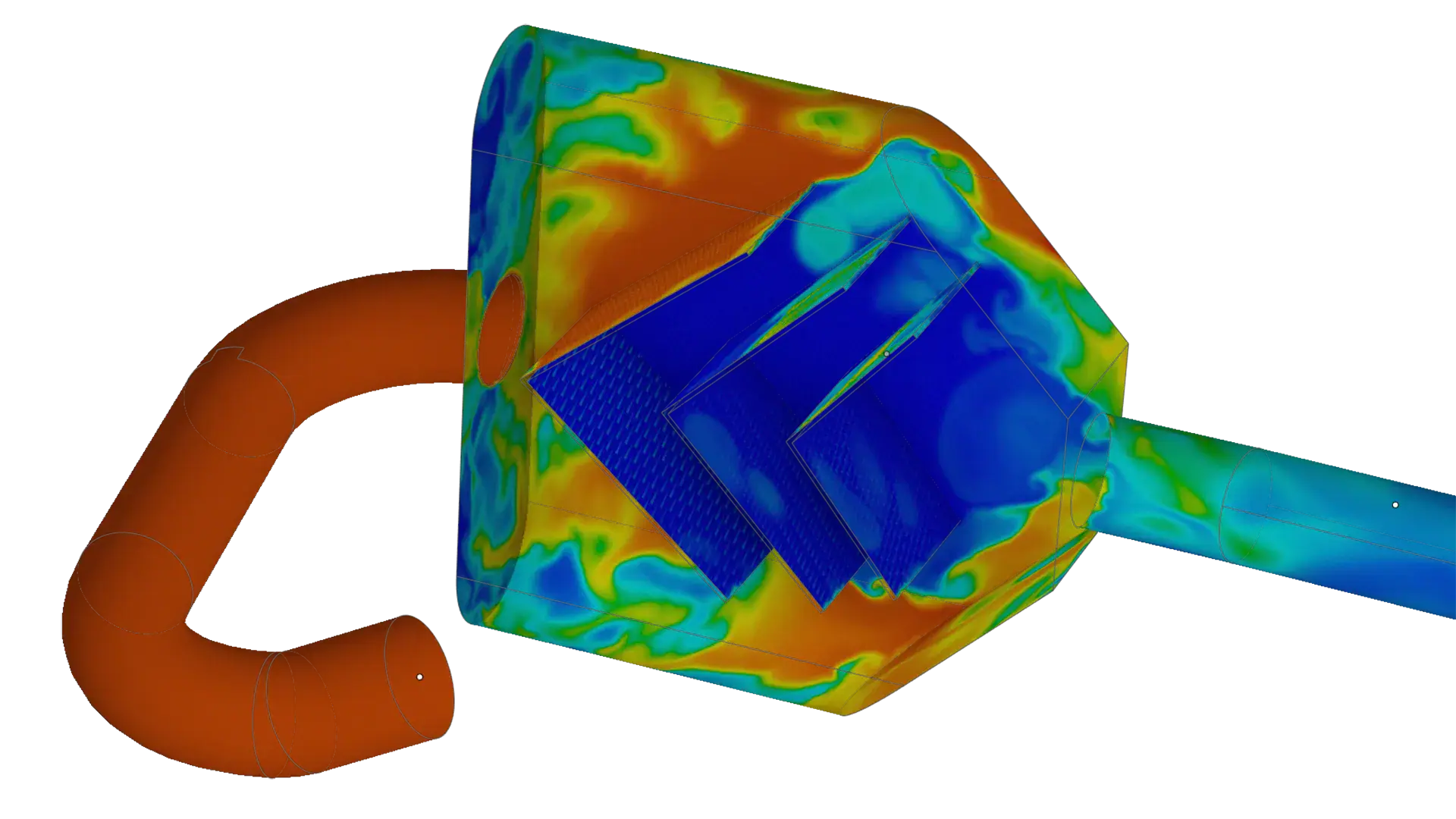
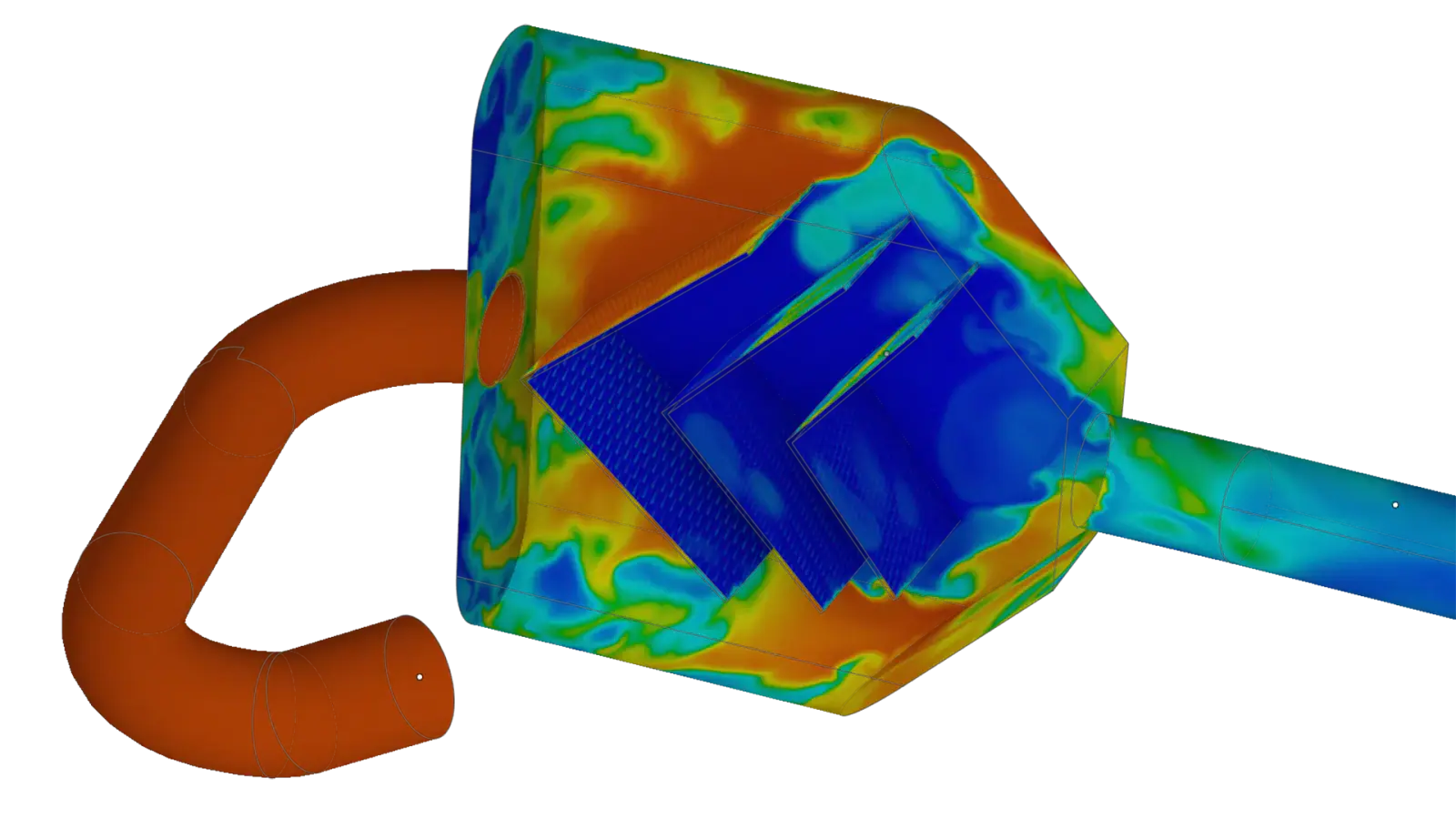
Heat Diffusion in the Resonance Chamber at High Load and High RPM
Walkthrough
How it came together
- 01
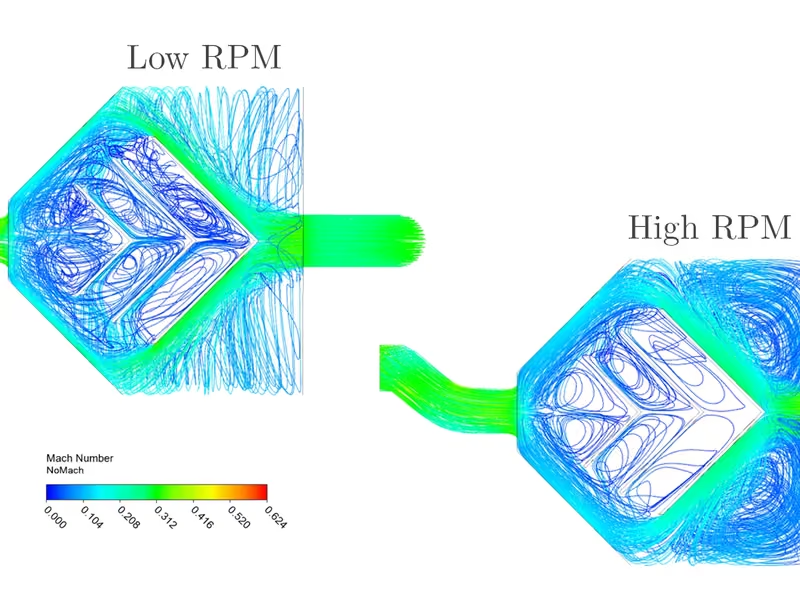
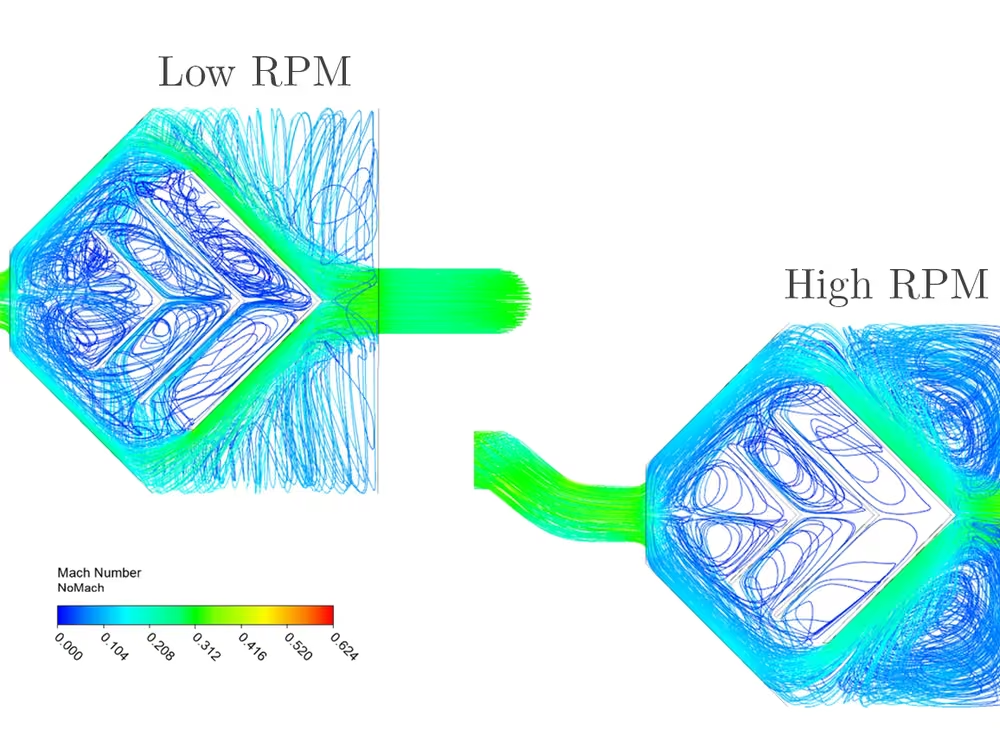
Simulated streamlines at low RPM (where acoustic attenuation is needed) versus high RPM (where low impedance is needed)
- 02
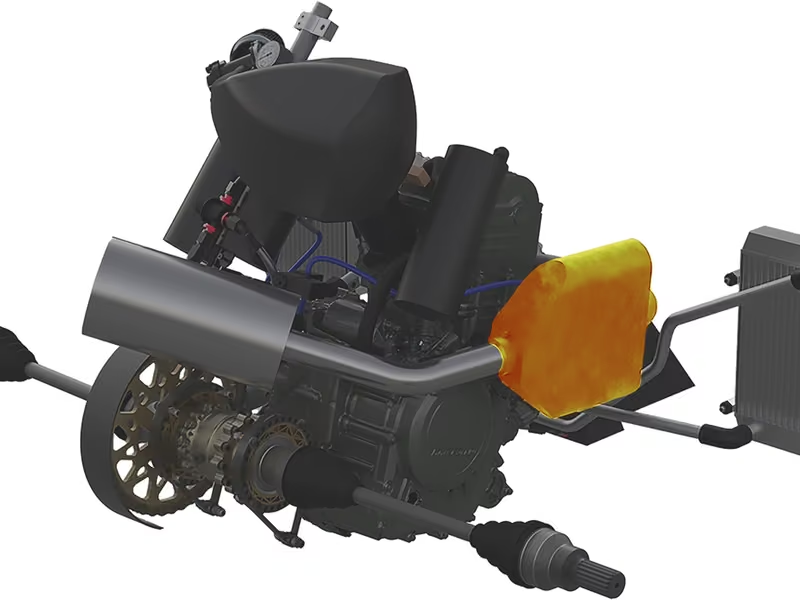
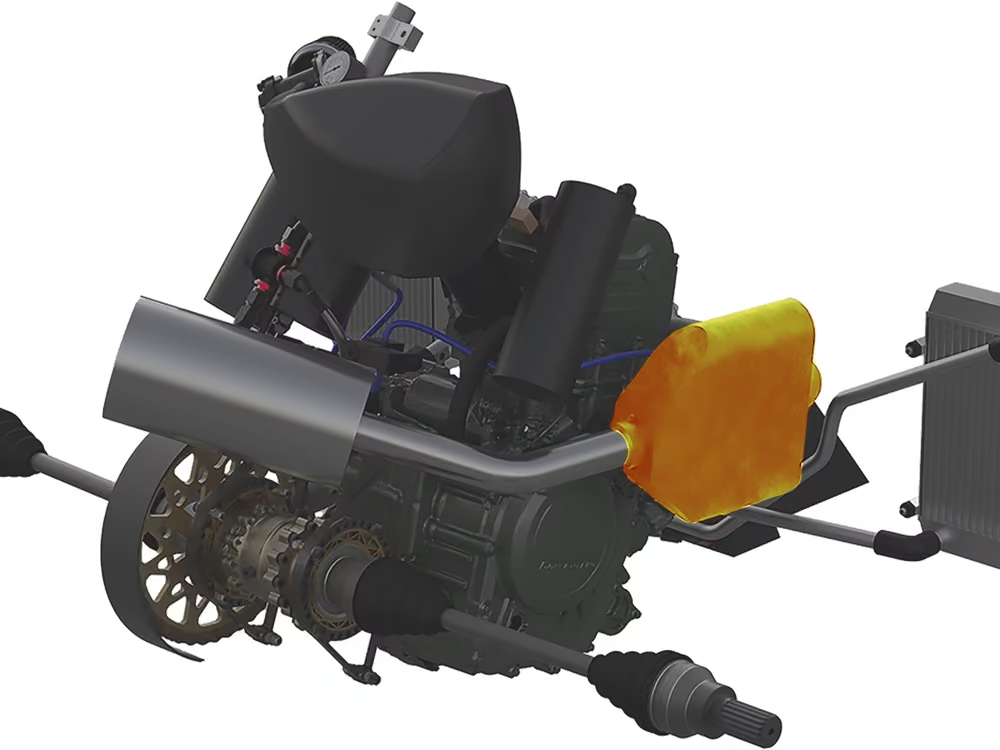
Resonator positioning along the powertrain of the prototype
- 03
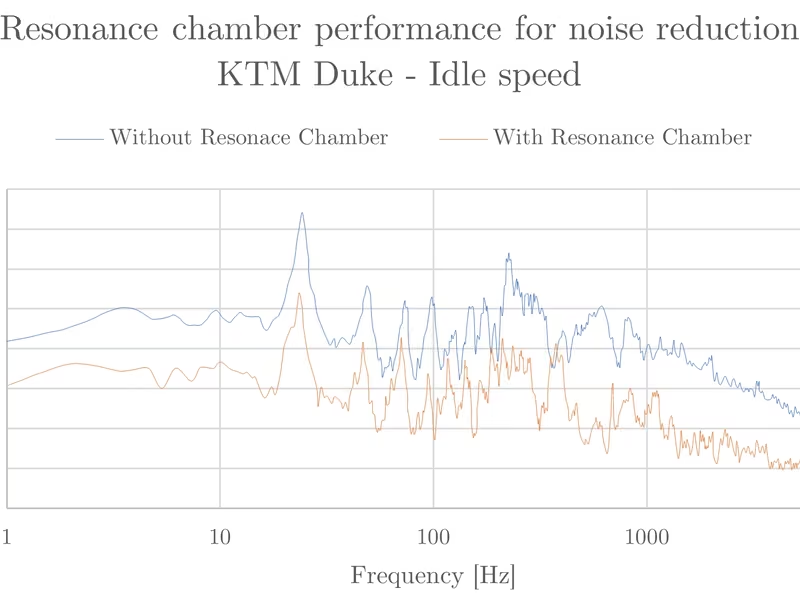
Spectral sound level comparison: without the resonator (blue) versus with it (orange)
Have a similar problem?
+2% peak power, −10 dBC average noise, −12 dBC at idle. Tell me what you're working on and I'll tell you directly whether and how I can help.
I reply to every enquiry within one business day.
+55 16 99785-1402