Structural Analysis (FEA) & Optimization
Take the mass out without spending the safety margin.
Structural validation, topology optimization, and fatigue analysis for weight-critical, high-stress components.
Live solver: cantilever bending, recomputed as you drag. Same mass either way: doubling height is 8× stiffer, doubling width only 2×.
Symptoms
Does any of this sound like your program?
This part is over its weight target and nobody wants to be the one who thins it.
It keeps failing in the field and we don't know which load is doing it.
We have a safety factor, but no idea how much of it is real.
The optimizer gave us a shape we have no idea how to manufacture.
A safety factor you can’t trace back to a real load cycle isn’t a safety factor. It’s a guess with a decimal point.
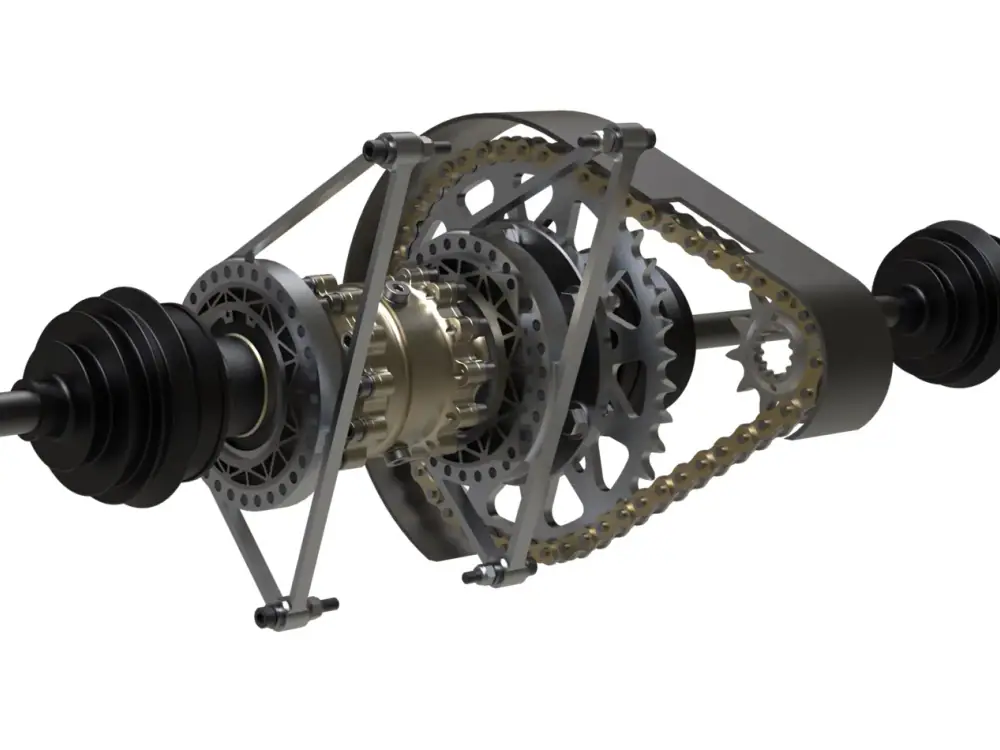
Most weight sits in parts nobody dares to thin, because nobody can say precisely how much margin is really there. Measure the duty cycle the part actually sees, model it properly, and that fear usually turns out to be worth 20–30% of the part’s mass — the differential sprocket gave up 22% and still held 1.4 minimum across a 1500 km fatigue life.
What this covers
- Topology optimization for mass reduction under real constraints
- Thermo-structural coupled simulation, including warping and thermal fatigue
- Design validation and fatigue-life analysis from measured load cycles
- Correlation against telemetry, dynamometer, or bench-test data
How an engagement works
- Scope call. What the part is, what failure mode worries you (or what mass target you’re chasing), and what data exists on the real operating loads.
- Proposal. Scope, deliverables, and timeline in writing before work starts.
- Analysis and iteration. Simulation runs, design changes, re-runs — structural work is inherently iterative, and you’ll see that process rather than only its conclusion.
- Deliverables and review. Results, safety margins, and a manufacturing-readiness assessment where it’s relevant.
Deliverables
What you actually receive
Stress, displacement, and safety-factor fields across the real duty cycle
Fatigue life estimate built from your measured load cycle, not an assumed one
Optimized geometry with the mass saved and the margin retained, both quantified
A manufacturability assessment so the optimized shape can actually be built
Proof
Where this has been done before

Questions
Frequently asked
- Can you optimize an existing part, or only design new ones?
- Both. Topology optimization is often most valuable applied to an existing part that's overweight or under-performing — the differential sprocket case study is a direct example, at 22% lighter than the previous design while holding a 1.4 minimum safety factor.
- Do you handle thermal-structural coupling, not just static loads?
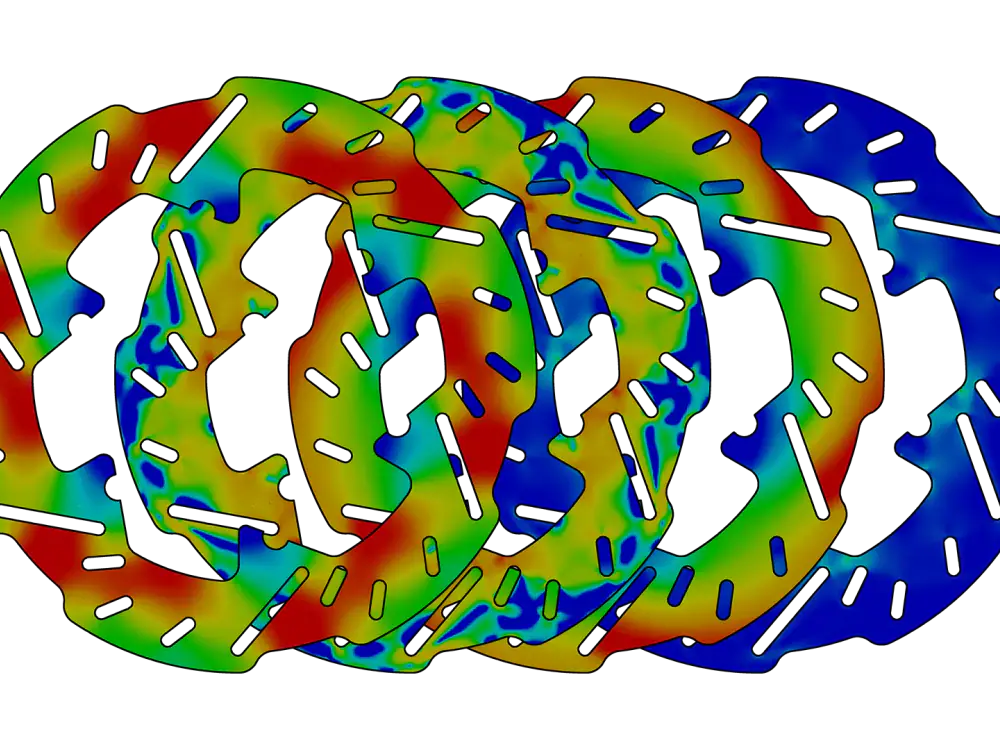
- Yes — thermal expansion, warping, and high-temperature fatigue are standard parts of the workflow when the component's duty cycle calls for it. Brake rotors are the clearest example: the thermal load is the structural load.
- What do you need from me to start a fatigue analysis?
- The load cycle the part actually experiences — measured if you have it (telemetry, dynamometer data), estimated from operating conditions if you don't. The fatigue model is only ever as good as the cycle it's built from, so this is the input worth spending time on.
- Will the optimized part be manufacturable?
- That's treated as a constraint from the start, not a cleanup step afterwards. A raw topology-optimization output is almost never buildable as-is; translating it to a real process without giving the performance gain back is the actual work.
What do you need solved?
Structural validation, topology optimization, and fatigue analysis for weight-critical, high-stress components. A few lines on the problem is enough to start.
I reply to every enquiry within one business day.
+55 16 99785-1402